
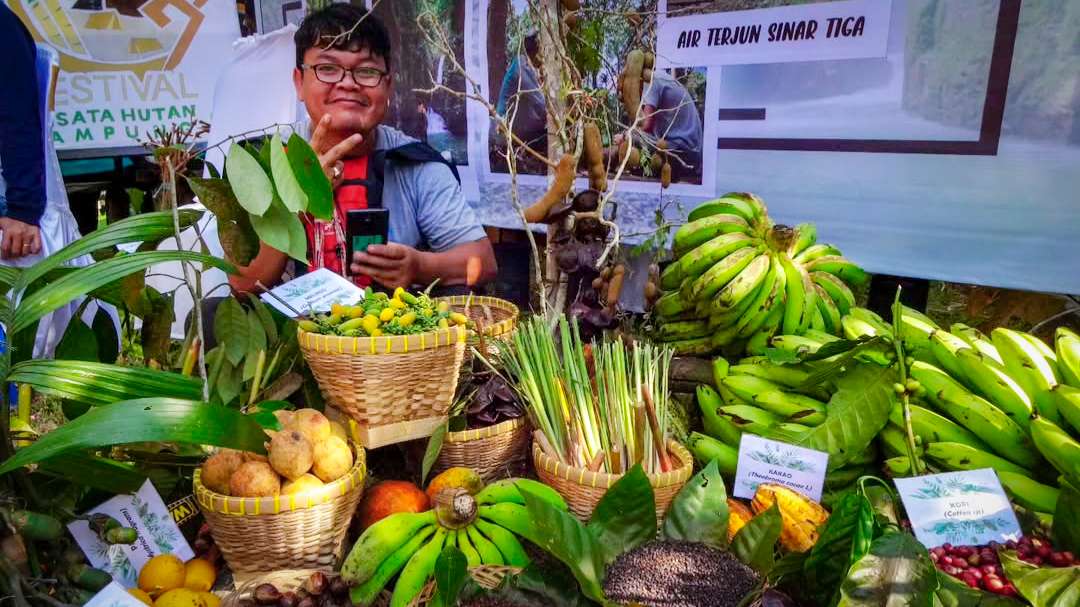
DASWATI.ID – The province of Lampung has firmly established itself as a plantation giant in Indonesia, with its “green economy” now resting almost entirely on the shoulders of local small-scale farmers.
However, this economic engine, which operates largely without the involvement of major corporations, faces a critical test as strict environmental mandates from the European Union (EU) loom on the horizon.
The Backbone of the Economy: Smallholder Dominance
According to the “2024 Indonesian Annual Plantation Statistics (Badan Pusat Statistik RI, Agustus 2025),” Lampung’s agricultural success is uniquely driven by Smallholder Plantations (Perkebunan Rakyat).
Unlike other regions where large estates dominate, the most vital commodities in “Bumi Ruwa Jurai” are managed 100% by the community.
The Pepper King: Lampung is officially the largest pepper producer in Indonesia, contributing 26.81% of the national output.
Despite a slight reduction in land area to 45,048 hectares, smallholders successfully increased production to 15,791 tons of dry pepper in 2024. Remarkably, the state and private sectors recorded zero production in this category.
Coffee and Coconut: The province’s 152,609 hectares of coffee and 91,087 hectares of coconut are also entirely managed by smallholders. Coffee productivity has seen a sharp rise, jumping from 768 kg/ha to 867 kg/ha within a single year.
Other Commodities: Clove production grew to 2,127 tons, while cocoa, another critical smallholder crop, continued to expand, reaching 48,110 tons in 2024.
Strategic Challenges in Palm Oil and Rubber
While smallholders are the “main engine” of the economy, some sectors face headwinds. Although smallholders own the largest share of palm oil land (111,404 ha), total provincial production fell to 375,239 tons in 2024.
Similarly, the rubber sector saw a decline in land area and production, though smallholders remain the dominant players with over 104,000 hectares.
Baca Juga: Geliat Perkebunan Rakyat Lampung, Tulang Punggung Ekonomi Hijau
The EUDR: A Global Gatekeeper
The sustainability of this local success is now tied to EU Regulation 2023/1115 (EUDR). This policy mandates that specific commodities entering the EU market must be deforestation-free, meaning they were not produced on land deforested after December 31, 2020.
Of the seven commodities targeted by the EU, four are pillars of Lampung’s economy: coffee, cocoa, palm oil, and rubber. To comply, farmers must meet three strict criteria:
- Evidence of deforestation-free land.
- Production in accordance with national legislation.
- A formal due diligence statement.
Timeline and Relief for Small Operators
Following a recent update (Regulation 2025/2650), the EU has delayed the implementation of these rules by 12 months to protect business competitiveness and reduce administrative burdens. The new general deadline is December 30, 2026.
Crucially for Lampung, Micro and Small Enterprises (SMEs) established before late 2024 have until June 30, 2027, to comply.
Furthermore, small operators in “low-risk” regions enjoy simplified rules, such as submitting simple declarations instead of complex due diligence reports and using postal addresses instead of precise geolocation coordinates.
The Risk of Non-Compliance
Despite these concessions, the EU will maintain a strict benchmarking system, categorizing countries by risk levels. High-risk regions will face annual inspections of 9% of their products.
The cost of failure is steep. Companies or operators found violating these rules face severe sanctions, including the seizure of products and fines of up to 4% of their total annual turnover within the EU.
For the smallholders of Lampung, adapting to these global green standards is no longer optional, it is a necessity for survival in the international market.
Baca Juga: Uni Eropa Sahkan Aturan Produk Bebas Deforestasi untuk 7 Komoditas

