
DASWATI.ID – The Free Nutritious Meal (Makan Bergizi Gratis/MBG) program in Lampung Province is no longer just about fulfilling public nutritional needs.
As of February 2026, the program has evolved into a massive economic catalyst, creating a circular ecosystem that connects nutritional kitchens directly to local farmers’ fields.
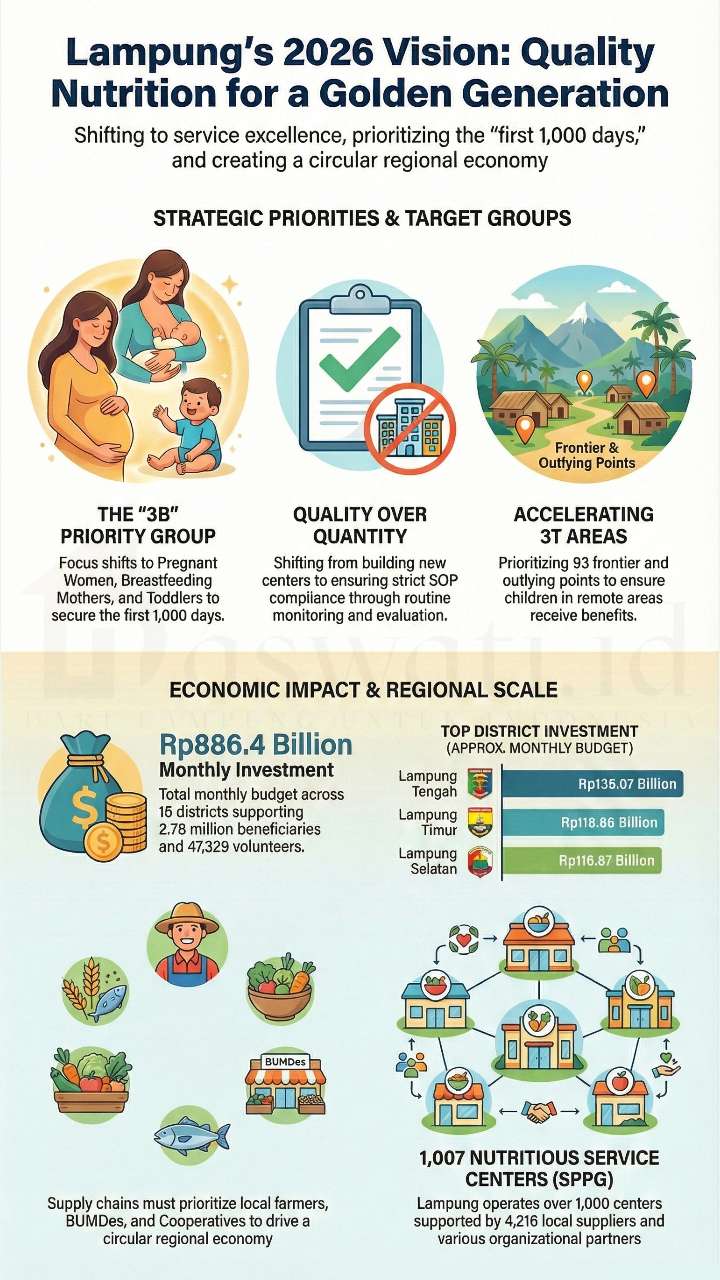
With a total monthly budget reaching Rp886.39 billion spread across 15 districts and cities, MBG has become a new pillar for regional economic independence.
Massive Scale Driving the Village Economy
Data illustrates the sheer scale of this program in the “Bumi Ruwa Jurai” region. Currently, there are 1,007 Nutritional Service Units (Satuan Pelayanan Pemenuhan Gizi/SPPG) serving 2,782,787 beneficiaries.
These figures are not merely statistics; they represent a stable market demand for local agricultural and livestock products.
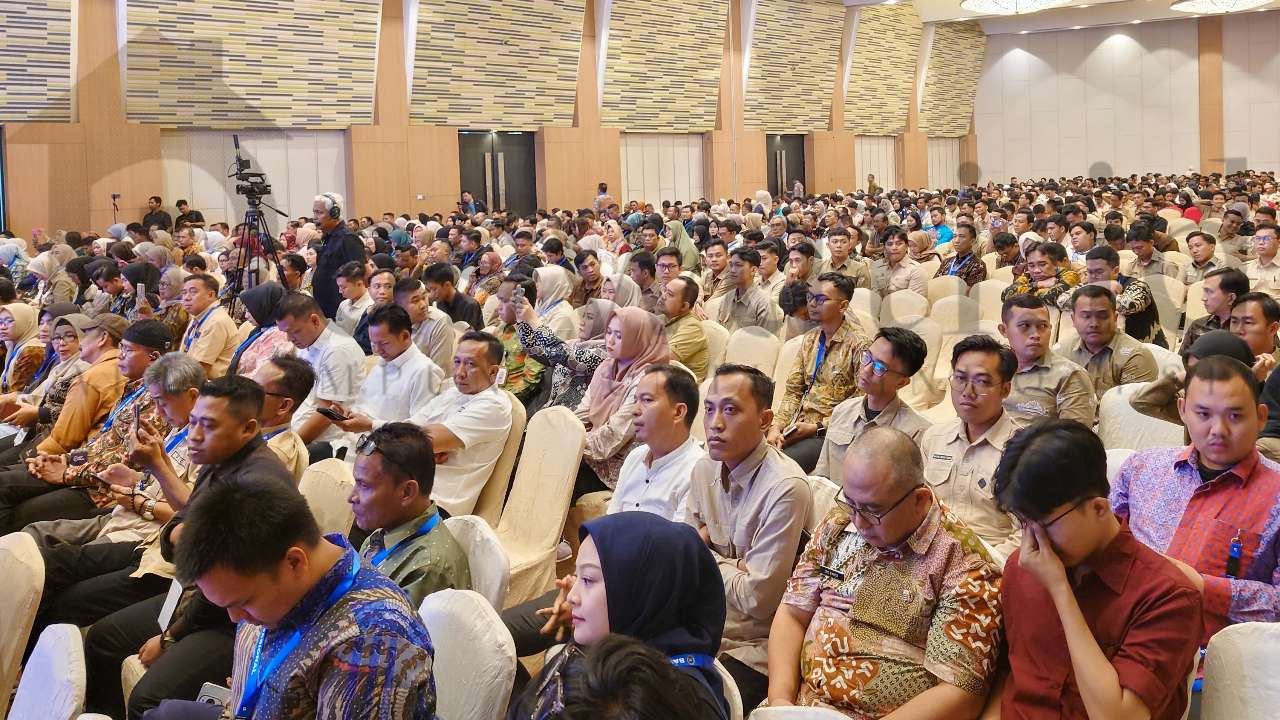
The Head of the Lampung Province Department of Community Empowerment, Village, and Transmigration (Dinas Pemberdayaan Masyarakat, Desa dan Transmigrasi/DPMDT), Saipul, S.Sos., M.IP, emphasized that the orientation for 2026 is on quality and local integration.
“We want the community around the SPPGs to have a sense of ownership and support the implementation of this MBG program, as they will receive benefits, both directly and indirectly,” he stated.
Shortening Supply Chains for Local Farmers
The core of the MBG circular economy in Lampung is the absorption of food ingredients from the nearest sources.
The Lampung Provincial Government has taken a firm stance, directing all supply partners to stop relying on food supplies from outside the region.
This integration is strengthened through formal partnerships between SPPGs, Village-Owned Enterprises (Badan Usaha Milik Desa/BUMDes), and cooperatives.
In practice, this move provides market certainty for village-level producers. Saipul explained that this commitment has already begun in various areas, such as Central Lampung.
“We are first securing agreements and commitments so that local farmers get opportunities, giving them the chance to plant vegetables or create fish ponds to meet MBG needs,” Saipul explained during a consolidation meeting in Bandar Lampung.
The Multiplier Effect and Job Creation
This ecosystem involves a vast network, including 4,216 suppliers consisting of 616 cooperatives, 29 BUMDes, and 1,393 MSMEs (Micro, Small, and Medium Enterprises).
The involvement of thousands of local business entities creates a significant domino effect on the grassroots economy.
Beyond raw materials, the program serves as a major employer, with 47,329 SPPG volunteers actively involved.
The Vice Head of the National Nutrition Agency (Badan Gizi Nasional/BGN), Irjen Pol. (Purn) Sony Sonjaya, highlighted how the program systematically eliminates waste at the farmer level.
“The MBG program is not just about providing food, but also providing a multiplier effect on the circular economy. So, there are no more stories of farmers’ harvests being thrown away because they were not absorbed by the market,” Sony asserted.
Focusing on Vulnerable Groups for the Future
In addition to short-term economic impacts, the MBG program in Lampung carries a long-term mission through the “School Meal Plus” concept.
Unlike other countries, Indonesia prioritizes the “3B” vulnerable groups: Pregnant Women, Breastfeeding Mothers, and Toddlers, as the foundation for the first 1,000 days of life.
“This MBG program is not just about feeding, but about how we plan for Indonesia’s future. We are preparing for ‘Indonesia Emas 2045’ starting now,” Sony added.
With the largest budget allocations in areas like Central Lampung (Rp136 billion) and East Lampung (Rp118 billion) per month, the program ensures that nutritional investment goes hand-in-hand with sustainable local economic empowerment.
Through synergy between government policy, partner commitment, and the active participation of village cooperatives, Lampung is building a resilient circular economy model.
MBG has proven that nourishing the nation can be the engine that drives prosperity for those who grow and provide food on their own land.
Baca Juga: Meluruskan Kiblat Makan Bergizi Gratis di Lampung

